

Android’s getting increasingly hostile, and my love for ShakePay is taking a nosedive.
I realized I only kept it on my watch for one reason: swapping card details everywhere is a nightmare.
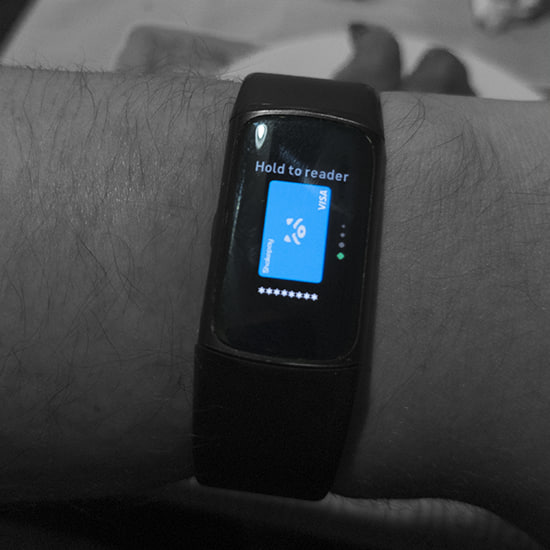 I only really thought about this while sitting in a Chinese restaurant, because it was another Christmas spent alone. Yes, yes — stereotype acknowledged: the non-Christian eating Chinese food on Christmas. Moving on.
Here’s the actual problem.
I live in a region where Google Wallet and Fitbit Pay are officially supported, and yes, my cards fully support both. On paper, everything should work. The failure point isn’t my bank, my country, or the watch itself — it’s the fact that I don’t run stock Android.
For reasons known only to Google’s security theater department, they now expect you to be on fully stock Android just to update payment methods on a wearable. Not root access. Not custom ROM misbehavior. Just the crime of not running Google’s blessed configuration.
Before Google took over Fitbit in 2019, things were fine. Then, as the late John McAfee once put it:
“Something went wrong… I had some beautiful software and they took it.”
He was talking about the antivirus company he sold, but the sentiment fits perfectly. Once Google gets involved, the product doesn’t just change — it hardens, locks down, and slowly forgets who it was built for.
Fitbit Pay launched in 2017, and it was genuinely great. It did exactly what it needed to do, without demanding ideological purity from your phone. But like so many good things, once Google touched it, everything started going downhill.
Normally, this should be dead simple: open the Fitbit app, tap your device, go into settings, and hit Wallet. That’s how it works for normal people.
For me? Of course not.
I spent hours troubleshooting — clearing cache, force-stopping the app, uninstalling and reinstalling it, the whole ritual. All I wanted to do was replace an expired card. Nothing exotic. Just basic adult life maintenance.
So out of pure desperation, I grabbed my 1st-gen iPad Pro — the one I use for rough graphic design — and tried the Fitbit app there.
And lo and behold, it worked immediately.
I updated my card details without a fight. No weird errors. No silent failures. Just… worked.
Which raises a pretty obvious question: what the hell was stopping it on my Pixel?
Answer: my Pixel isn’t running stock firmware.
That’s it. That’s the crime. Not fraud. Not malware. Not doing anything shady. Just not running Google’s blessed, factory-approved Android build.
And that is one of the most backwards ideas I’ve seen in a long time. Some people are going to say, “You’re using non-stock firmware — of course it wouldn’t work.”
Fair. That sounds reasonable… until you look at how this actually works.
I did some digging, and Fitbit Pay / Google Wallet on Fitbit doesn’t rely on the phone to mint the payment token. The phone is basically a courier: it signs you in, passes along the setup flow, and relays whatever approvals Google and Fitbit decide to grant.
The heavy lifting — tokenization, provisioning, the “yes/no” decision — happens on the server side (Google’s systems, with Fitbit in the loop). So in theory, whether my Pixel is stock or modded shouldn’t matter nearly as much as Google insists it does.
Which makes this feel less like “security” and more like a policy decision: we don’t like your device, therefore you don’t get to use the feature.
I think we need to start taking seriously the idea that Apple and Google have an unhealthy chokehold on the digital wallet ecosystem. When two companies can silently decide whether your hardware is “morally acceptable” enough to pay for dinner, that’s not convenience — that’s control.
I know the Free Software Foundation has talked for years about the need for truly user-controlled devices, and projects in the broader free-software world keep circling the same dream: a phone platform you actually own. Whether it’s something like “Librephone” or any other open mobile stack, the point is the same: payments shouldn’t require corporate permission slips.
Yes, regulators and banks are a huge part of the problem. And no — this isn’t as simple as “NFC is a standard, therefore tap-to-pay is easy.” NFC (ISO/IEC 14443) is just the radio layer. The real wall is certification, tokenization, secure elements, and the closed partnerships that decide who gets to participate.
But that’s exactly why this needs attention. The technical standards exist. Open-source ecosystems exist. What’s missing is an interoperable, user-respecting path that doesn’t force people into Apple’s garden or Google’s “stock-only” purity tests just to use money like it’s 2025.
Until that changes, “digital wallet” is just another way of saying: renting basic functionality from two gatekeepers